The global beverage market is in a constant state of flux, driven by evolving consumer palates and innovative product formulations. Among the myriad of trends, the integration of textural elements into ready-to-drink (RTD) products has emerged as a significant driver of growth.
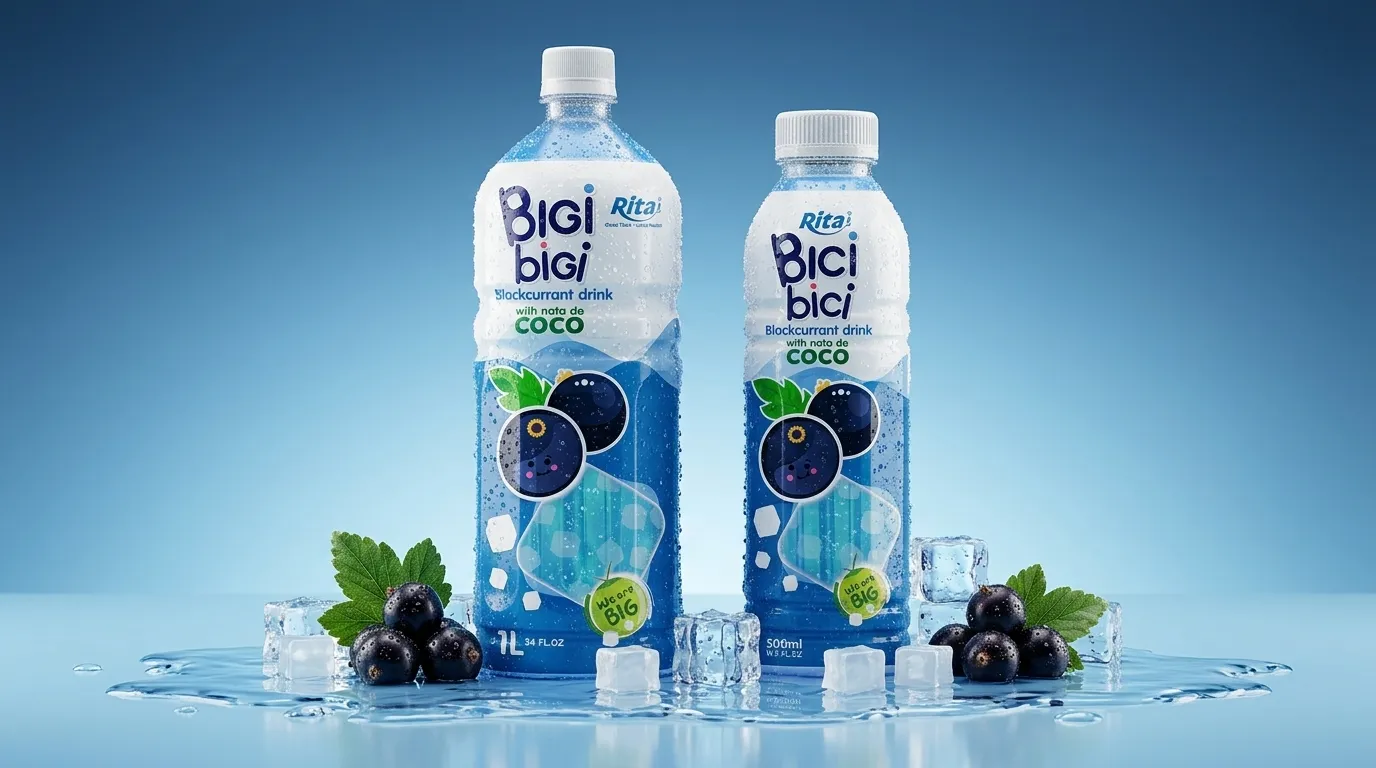
This article delves into the market dynamics, distribution strategies, and export potential surrounding this segment, using a specific product like the 1L PET Bottle BiGi BiGi Blackcurrant Drink with Nata de Coco as a practical example of a product aligned with contemporary demand.
Key Takeaways
- The demand for beverages with added texture, like nata de coco beverage offerings, is growing globally, particularly in Asian and Western markets.
- Flexible manufacturing models such as OEM and ODM are crucial for importers and distributors to build competitive private label lines.
- Operational advantages like flexible MOQ, long shelf life (18 months), and PET bottle packaging are key considerations for bulk beverage suppliers and F&B businesses.
- Vietnam is establishing itself as a reliable hub for beverage export, offering competitive production and logistics.
- Understanding HORECA applications and consumer flavor preferences, such as blackcurrant, is essential for successful product placement and marketing.
Evolving Consumer Palates and the Textural Beverage Trend
Modern consumers seek more than just hydration from their drinks. They desire a multisensory experience. This has propelled the popularity of beverages that incorporate chewable elements, transforming a simple drink into a more engaging consumption moment.
The inclusion of nata de coco, a chewy, translucent jelly made from fermented coconut water, perfectly caters to this trend. It adds a novel mouthfeel that distinguishes products on crowded shelves. This shift is not merely about novelty.
It reflects a broader interest in beverages that offer a perceived sense of indulgence and fun. For distributors and retailers, stocking items that align with this textural trend can drive higher impulse purchases and repeat business.
Flavor selection is a critical business decision. Blackcurrant, as seen in the BiGi BiGi example, offers a distinctive tart and sweet profile. It stands out in markets often saturated with citrus and berry blends.
Pairing such a flavor with nata de coco creates a unique product proposition. From a supply chain perspective, the 1L PET bottle format is a strategic choice. It caters to both at-home consumption and foodservice segments.
For HORECA businesses, large-format, visually appealing bottles can reduce packaging waste and cost per serving. The PET material ensures durability and lightweight logistics, a vital factor for bulk beverage suppliers managing international shipments.
Strategic Sourcing: OEM, ODM, and Private Label Opportunities
For importers, wholesalers, and entrepreneurs, building a brand in the competitive beverage sector requires agility. Partnering with a manufacturer that offers flexible production models is a powerful strategy.
The availability of OEM (Original Equipment Manufacturer) and ODM (Original Design Manufacturer) services, as indicated for the blackcurrant drink, allows clients to develop their own proprietary labels. This enables market differentiation without the massive capital investment of building a factory.
Key advantages for businesses include:
- Brand Control: Develop unique branding, label design, and marketing stories.
- Reduced Risk: Benefit from the manufacturer's R&D, quality control, and established supply chains.
- Market Responsiveness: Quickly launch products that align with local flavor trends or dietary preferences.
A comprehensive ODM service can be particularly valuable. It provides end-to-end support from concept to final product formulation.
Operational Excellence in Beverage Export and Distribution
The technical specifications of a product directly impact its viability in international trade. Let's analyze the given product details through a B2B lens.
A generous 18-month shelf life provides immense flexibility for distributors. It allows for longer sea freight transit times, extended warehousing, and broader geographic market reach without spoilage concerns.
The mention of a flexible Minimum Order Quantity (MOQ) is a significant attractor for small to medium-sized enterprises and new market entrants. It lowers the barrier to entry, allowing businesses to test a product's market fit before committing to large volume orders.
Supply ability of 600 twenty-foot containers per month signals robust manufacturing capacity and scalability. For large-scale importers, this assurance of consistent, high-volume supply is critical for planning long-term retail or foodservice contracts.
Vietnam as a Sourcing Powerhouse
The specified port of Ho Chi Minh is a major logistics hub. Vietnam has steadily grown as a premier destination for beverage manufacturing and export. Competitive labor costs, improving infrastructure, and extensive free trade agreements make it an attractive alternative to traditional sourcing countries.
For global buyers, sourcing from Vietnam can offer cost advantages while maintaining high quality standards, especially for products leveraging local agricultural inputs like coconut and fruit.
Market Application: Beyond the Retail Shelf
While retail is a primary channel, the potential for textured beverages extends further. In the Hotel, Restaurant, and Cafe (HORECA) sector, such products offer versatile applications.
They can be served as a standalone refreshment, used as a base for creative non-alcoholic cocktails, or even incorporated into desserts. The visual appeal of floating nata de coco cubes enhances the presentation, adding value to the dining experience.
For businesses looking to expand their soft drink offerings with unique points of differentiation, products in this category present a compelling opportunity. They cater to the growing consumer desire for experiential dining and drinking.
Navigating Global Trade: Payment and Logistics
Streamlined financial and logistical terms are the backbone of international trade. Common payment terms like Letter of Credit (L/C) and Telegraphic Transfer (T/T) provide security and flexibility for both buyer and seller.
A clear delivery timeline of 20-25 days after order confirmation allows importers to plan their inventory and marketing launches accurately. Understanding these operational parameters is as crucial as evaluating the product itself for anyone in the F&B distribution business.
Conclusion: Positioning for Success in a Dynamic Market
The rise of textured beverages like those featuring nata de coco is more than a passing fad. It represents a deeper shift in consumer expectations towards interactive and indulgent drink experiences.
For B2B players—from importers and distributors to private label entrepreneurs—the opportunity lies in strategic sourcing, understanding operational specs, and identifying the right market applications. Products that combine popular flavors like blackcurrant with innovative textures, packaged in convenient formats, are well-positioned for success.
By leveraging the manufacturing expertise and flexible models offered by producers in emerging hubs like Vietnam, businesses can efficiently bring these trending products to a global audience. The key is to view such beverages not just as inventory, but as strategic assets in a diversified and future-proof portfolio.
Frequently Asked Questions
What is the typical MOQ for beverages like the blackcurrant drink with nata de coco?
Many modern manufacturers, especially those offering OEM services, provide flexible MOQ structures. This allows businesses, from startups to established distributors, to order quantities that match their initial market testing or budgetary needs, reducing financial risk.
Why is PET bottle packaging common for export beverages?
PET (Polyethylene Terephthalate) bottles are lightweight, shatter-resistant, and recyclable. These properties significantly reduce shipping costs and breakage risks during long-distance transport, making them the preferred choice for export beverages from regions like Vietnam to global markets.
How can I develop my own brand of nata de coco drinks?
The most efficient path is to partner with a manufacturer that provides ODM or OEM services. They can handle everything from recipe development based on your flavor concept to production, packaging, and labeling according to your brand specifications, as seen with services offered for various fruit juice and specialty drink lines.