The global beverage landscape is undergoing a quiet revolution, driven by consumer demand for products that offer more than simple refreshment. At the forefront of this shift is a new category of interactive, experiential drinks that combine familiar flavors with novel textural elements. Among the most compelling examples is the Wholesale Popping Boba Tea Apple Flavor 320ml Slim Can, a product that marries the crisp, tart-sweet appeal of apple with the playful sensation of bursting boba pearls — all housed in a sleek, export-ready aluminum format.
Produced by RITA Food and Drink Co., Ltd., a Vietnamese OEM and ODM beverage manufacturer with over two decades of industry experience, this product exemplifies the kind of supply chain agility that global distributors now demand. With production capacity exceeding 1,200 container shipments per month and exports reaching more than 200 countries and territories, the company offers a compelling case study in how regional manufacturing powerhouses are reshaping international beverage markets.
In an era where major industry players like Suntory and ThaiBev are undertaking strategic restructuring, and brands like Royal Unibrew are consolidating production footprints, the ability to deliver innovative products at scale through reliable supply channels has become the defining competitive advantage. The Wholesale Popping Boba Tea Apple Flavor speaks directly to this reality — offering a product that is as operationally efficient to distribute as it is engaging to consume.
Key Takeaways
- The Popping Boba Tea Apple Flavor represents a growing consumer appetite for interactive, texturally diverse beverages across global markets spanning the Americas, Europe, Asia, the Middle East, Africa, and Oceania.
- RITA Food and Drink Co., Ltd. leverages over 50 automated production lines and a robust export network spanning 200+ countries to deliver consistent supply at scale.
- The 320ml slim can format addresses retail and distribution needs for single-serve convenience, shelf stability, and international shipping efficiency.
- Comprehensive international certifications — including BRC, FSSC 22000, Halal, Kosher, ISO, and GMP — enable frictionless entry into diverse regulatory environments.
- Flexible OEM and ODM service models allow brand partners to customize formulations, packaging, and labeling for localized market strategies.
The Global Appetite for Novel Tea Beverages
Tea remains one of the most consumed beverages worldwide, yet the competitive dynamics within the category have shifted dramatically in recent years. Traditional steeped and bottled teas now share shelf space with a growing roster of innovative formats — sparkling teas, fermented kombucha, and, increasingly, tea-based drinks enhanced with textural toppings like popping boba. Industry analysts point to this diversification as a direct response to evolving consumer expectations, particularly among younger demographics who prioritize sensory engagement alongside flavor quality.
The broader beverage industry is simultaneously experiencing significant structural changes that have direct implications for supply chain strategy. Companies such as Sazerac have recently been ordered to honor existing contracts, highlighting the importance of regulatory compliance in international trade. Meanwhile, Biomel is advancing plant-based product lines at its UK facility, reflecting a parallel trend toward innovation in the functional beverage space. These movements collectively underscore a global environment in which supply chain resilience and operational efficiency are no longer optional — they are prerequisites for competitive survival.
Against this backdrop, the Popping Boba Tea Apple Flavor occupies a strategic niche. It delivers the familiarity of apple — a universally recognized and widely appealing flavor — while introducing the novelty of popping boba pearls that burst upon consumption, creating a multi-sensory experience. For distributors and retailers seeking products that differentiate on the shelf and generate repeat purchases, this combination of broad appeal and interactive novelty presents a compelling proposition. The product's alignment with the sparkling soft drinks category further enhances its retail versatility, positioning it alongside established fizzy beverage segments while carving out its own distinct identity.
Inside the Popping Boba Tea Apple Flavor Slim Can
Flavor Profile and Sensory Appeal
The apple flavor profile in this beverage is calibrated to strike a balance between tartness and sweetness, drawing on the universally familiar characteristics of the fruit. The liquid base is a tea-infused apple drink that delivers a refreshing, lightly carbonated mouthfeel, making it suitable for a wide range of consumption occasions — from casual retail grab-and-go to social gatherings and food service pairing scenarios. The calorie content, at 37 calories per 100ml, positions the product within the moderate range expected by today's informed consumers who examine nutritional labels before purchasing.
The slim 320ml aluminum can format is a deliberate choice with significant supply chain implications. Slim cans are lighter and more space-efficient than standard beverage cans, translating to lower per-unit shipping costs and higher pallet density during ocean freight and warehouse storage. For international distributors managing tight margins and complex logistics, this packaging optimization represents a tangible economic advantage that compounds across thousands of units and multiple container shipments.
The Interactive Popping Boba Element
What truly distinguishes this product is the inclusion of popping boba pearls — small, gel-encapsulated spheres that burst when bitten, releasing a concentrated burst of apple-flavored liquid. This textural element transforms the drinking experience from passive consumption into an active, engaging event. The product label explicitly advises consumers to "Shake Well Before Drink," underscoring the interactive nature of the beverage and ensuring that boba pearls are evenly distributed throughout the can for optimal sensory delivery with every sip.
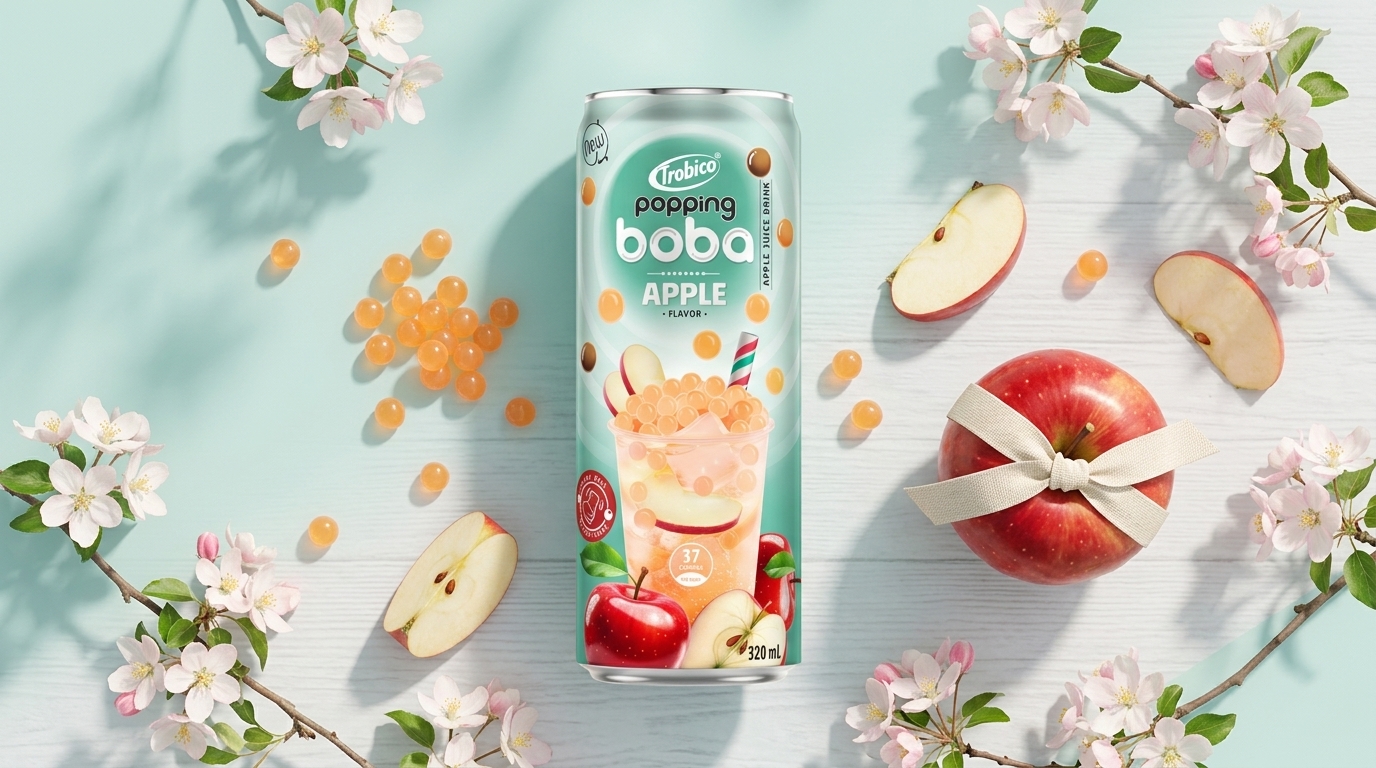
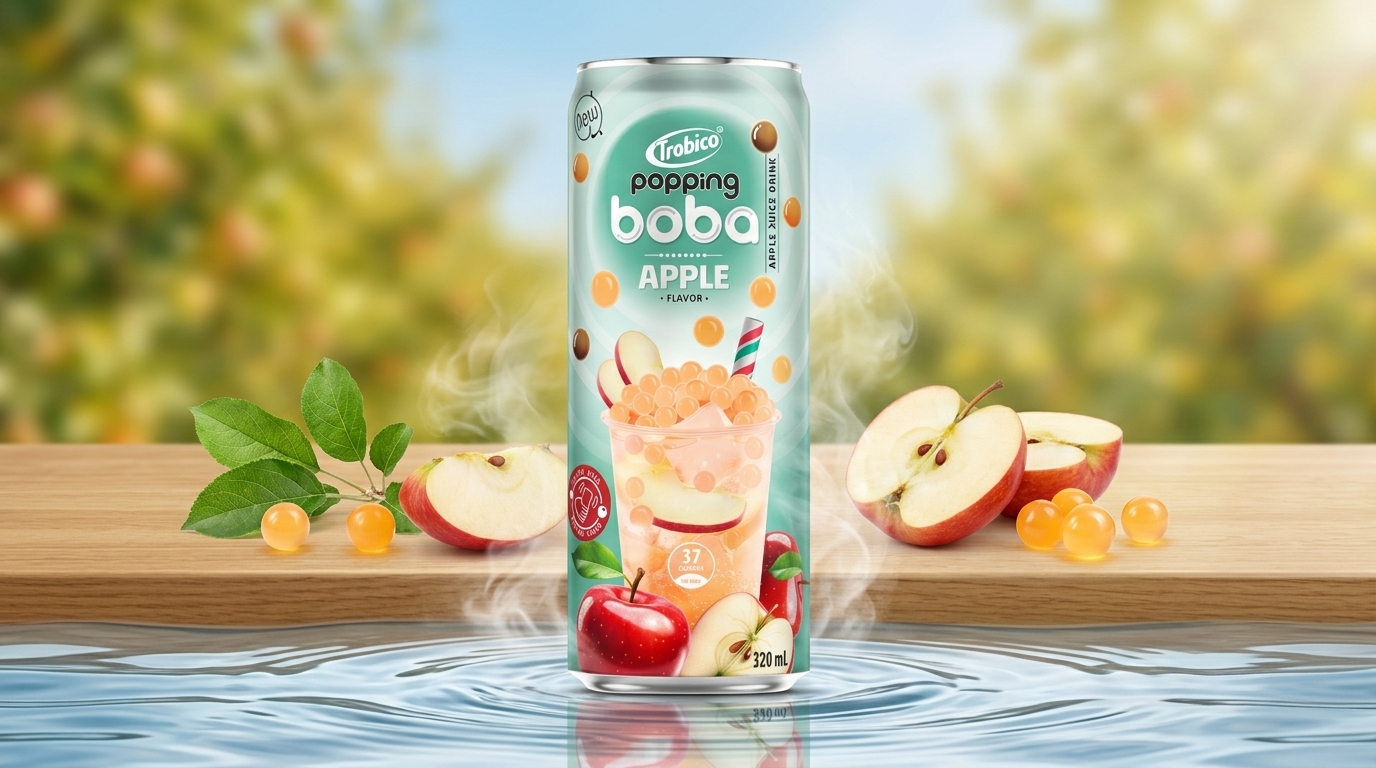
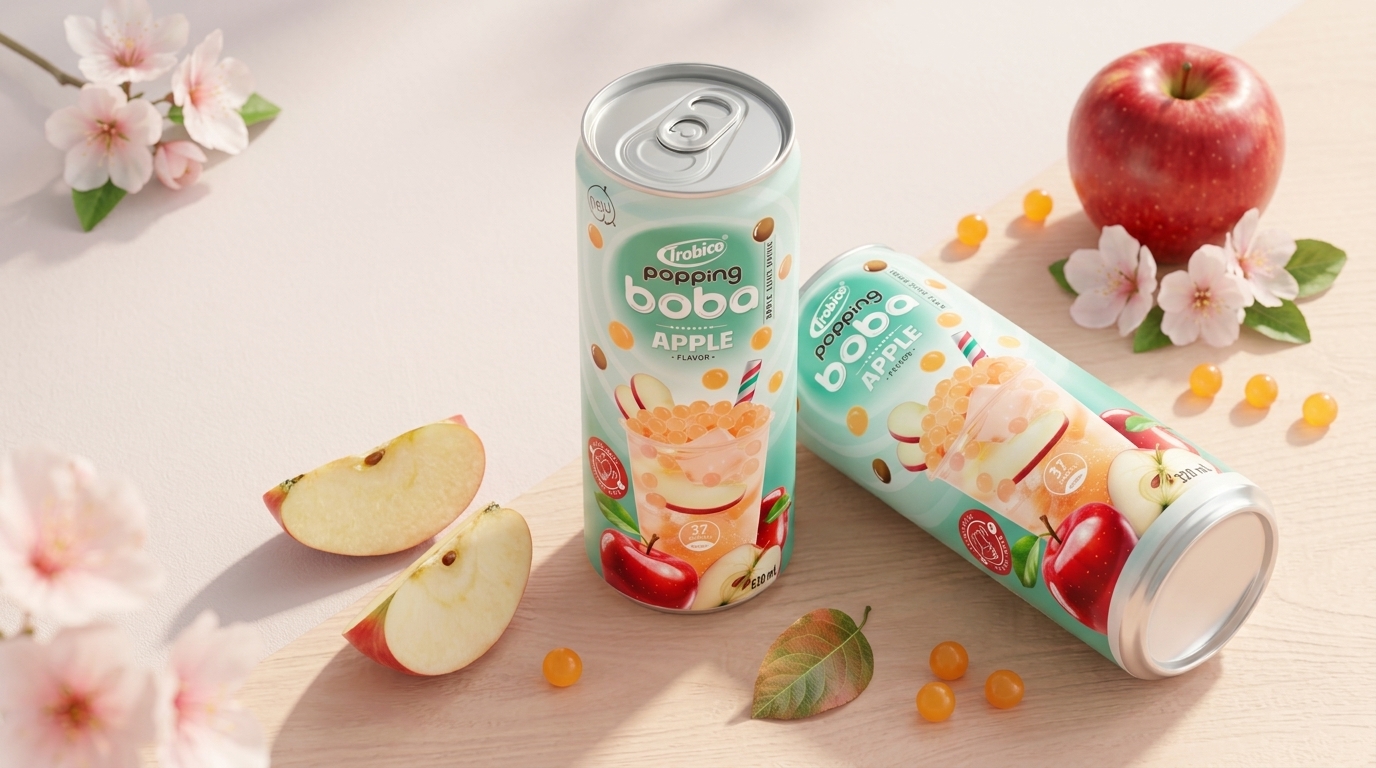
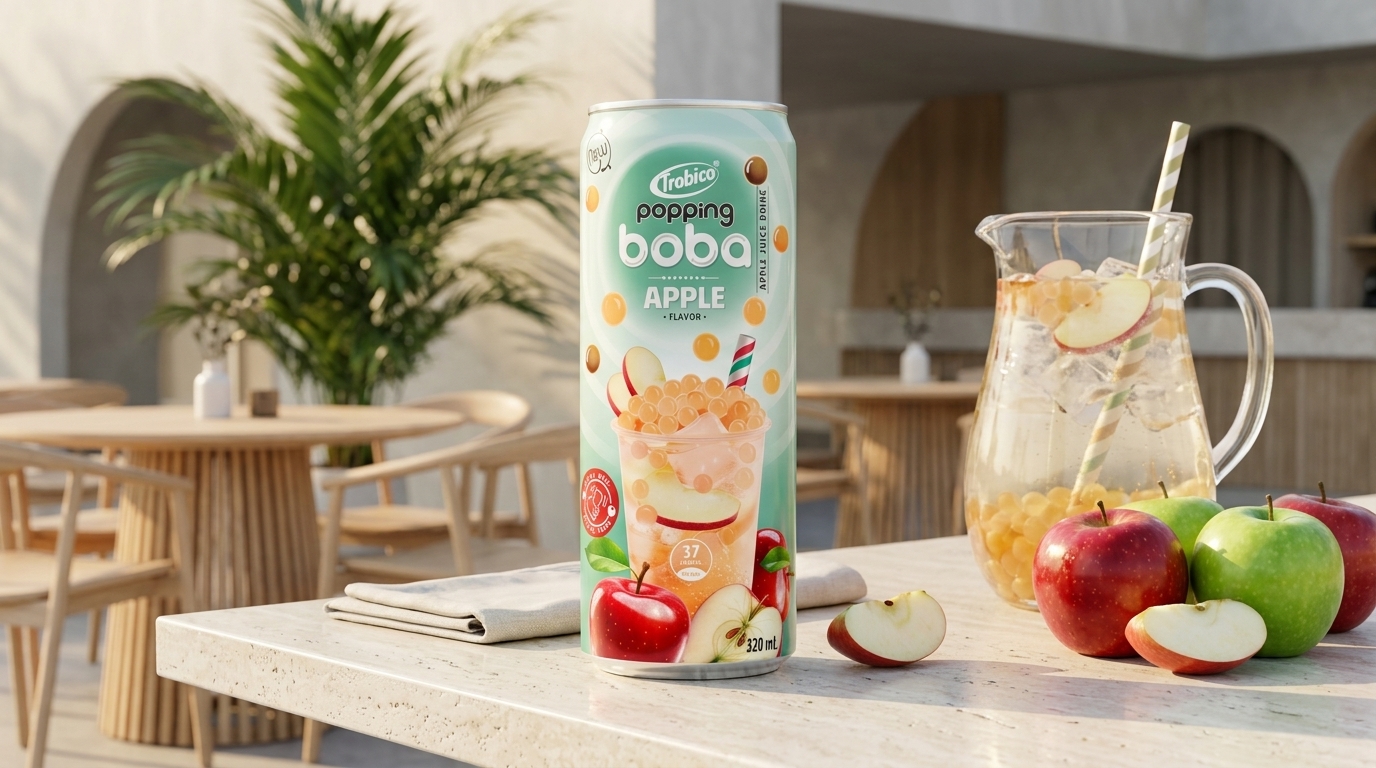
This "fun, interactive" positioning aligns with a broader consumer trend toward experiential products that generate social media engagement and word-of-mouth recommendations. In markets across the Americas, Europe, Asia, the Middle East, Africa, and Oceania, novelty beverages that offer shareable moments have demonstrated strong growth trajectories, particularly in retail channels targeting millennial and Gen-Z consumers. The visual packaging — featuring a light mint-green can adorned with vibrant red apple illustrations, a prominent "New" badge, and clear imagery of boba pearls — communicates both novelty and quality at the point of sale, reducing the need for extensive marketing investment to drive trial purchases. For distributors evaluating wholesale popping boba tea apple flavor opportunities, this self-selling packaging design is a meaningful advantage.
Scalable Manufacturing and Supply Chain Excellence
Behind every successful beverage product lies a manufacturing infrastructure capable of delivering consistency, volume, and speed to market. RITA Food and Drink Co., Ltd. — established in 2004 and headquartered in Vietnam — has built precisely this kind of operation. The company operates more than 50 automated production lines across its facilities, enabling it to handle high-volume orders while maintaining the flexibility to accommodate custom formulations and packaging specifications for diverse market requirements.
For brand partners evaluating sourcing options for the Popping Boba Tea Apple Flavor, this manufacturing scale provides critical assurance of supply reliability. The company exports more than 1,200 containers per month and serves clients in over 200 countries and territories, demonstrating the logistical sophistication required to manage complex international supply chains across diverse regulatory environments. Whether the destination is a distribution hub in Rotterdam, a retail chain in the Gulf States, or a wholesale network in Southeast Asia, the operational infrastructure exists to deliver consistent quality at the volume required for meaningful market penetration.
The OEM service model offered by RITA allows brand owners to leverage existing production infrastructure without the capital expenditure of building their own facilities. This approach is particularly valuable for emerging brands seeking to enter the boba tea category quickly, or for established companies looking to expand their product portfolios without diverting internal resources from core operations. Complementing this is a full ODM service that encompasses research and development, formulation design, and market-specific adaptation — enabling partners to move from concept to container with minimal friction.
Quality Assurance and International Certification Standards
Entering global beverage markets requires navigating a complex web of food safety regulations, labeling requirements, and certification standards that vary significantly by region. RITA addresses this challenge through a comprehensive certification portfolio that enables streamlined market access across virtually all major trading blocs and retail channels.
- BRC (British Retail Consortium) — a globally recognized standard for food safety and quality management, widely required by European and UK retailers as a prerequisite for shelf placement.
- FSSC 22000 — an international food safety management system certification based on ISO standards, accepted across the European Union and increasingly demanded by global procurement teams.
- Halal (Jakim and HCA-GCC) — dual Halal certifications covering Southeast Asian and Gulf Cooperation Council markets, essential for penetration into Muslim-majority regions spanning the Middle East, North Africa, and parts of Asia.
- Kosher — certification required for distribution in markets with significant Jewish consumer populations and increasingly demanded in premium retail channels globally.
- ISO, GMP, HACCP, and SMETA — foundational standards covering quality management, good manufacturing practices, hazard analysis, and ethical social auditing that satisfy the due diligence requirements of multinational retail buyers.
For the Popping Boba Tea Apple Flavor specifically, these certifications mean that distributors can pursue listings in hypermarket chains, convenience store networks, and food service channels across multiple continents without encountering certification-related barriers to entry. The availability of a 24-month shelf life further enhances the product's suitability for long-distance ocean freight and extended retail display periods, reducing waste and improving margin stability across the distribution chain.
Sourcing Ingredients in Vietnam's Fertile Lands
The quality of any beverage product begins with its raw materials, and Vietnam's agricultural landscape provides a rich foundation for fruit-flavored drink production. The country's diverse climatic zones — from the tropical lowlands in the south to the temperate highlands of the Central region — support the cultivation of a wide variety of fruits used in beverage manufacturing, creating a vertically integrated supply chain advantage for producers based in the country.
The Mekong Delta region, in particular, serves as a vital source of high-quality agricultural inputs for RITA's production facilities. Known as Vietnam's "rice bowl," the delta's alluvial soils and abundant water resources also support extensive fruit orchards and plantations that supply the raw ingredients for the company's diverse beverage portfolio. From tropical fruits to tea leaves, the proximity of these raw material sources to RITA's manufacturing hubs reduces transportation costs and ensures ingredient freshness — two factors that directly impact both product quality and supply chain economics.
The journey from farm to factory in Vietnam's fruit-growing regions exemplifies the kind of vertically integrated supply chain that global beverage buyers increasingly value. By maintaining close relationships with local agricultural producers and investing in quality oversight at the sourcing stage, manufacturers like RITA can deliver consistent flavor profiles and product specifications across large production volumes. For brands sourcing from tea, honey, and fruit drink categories, this direct connection to agricultural origins provides traceability and quality assurance that resonate with end consumers and regulatory bodies alike.
Global Distribution and Market Penetration
For international distributors evaluating new product categories, the wholesale popping boba tea apple flavor 320ml slim can offers several attributes that reduce market-entry friction. The slim can format is compatible with standard retail shelving and vending machine configurations worldwide. The 24-month shelf life accommodates the extended lead times inherent in transoceanic shipping. And the product's visual packaging — featuring a distinctive light mint-green design adorned with red apple illustrations — communicates freshness and novelty at the point of sale without requiring supplementary point-of-sale materials.
RITA's export infrastructure is built to serve a truly global customer base across all international markets. With delivery timelines of approximately 20 to 25 days from Ho Chi Minh Port following order confirmation, and flexible minimum order quantities that accommodate both trial shipments and full-scale container orders, the company's service model is structured to support partners at every stage of market development — from initial product testing in a single territory to sustained high-volume distribution across multiple continents simultaneously. Free sample availability further lowers the barrier for distributors conducting product evaluations and retail buyer presentations.
The company's beverage catalog extends well beyond boba tea, encompassing tropical fruit juices, coconut products, aloe vera beverages, energy drinks, milk-based beverages, and functional drink categories. This breadth of offering allows distributors to build diversified product portfolios from a single manufacturing partner, reducing supply chain complexity and consolidating vendor management overhead. In an industry where supply chain consolidation is an accelerating trend — as evidenced by the strategic moves of major players like Suntory and Royal Unibrew — the ability to source multiple categories from one certified manufacturer is an increasingly attractive proposition.
Frequently Asked Questions
What is the minimum order quantity for Popping Boba Tea Apple Flavor?
RITA offers flexible minimum order quantities to accommodate both new market testing and established distribution networks. The company's supply capabilities extend to 300 Twenty-Foot Containers per month, ensuring scalability as demand grows. Contact the company directly through the product page for specific MOQ details and volume-based pricing structures tailored to your market requirements.
What certifications does Popping Boba Tea Apple Flavor carry for international export?
The product is produced under BRC, FSSC 22000, Halal (Jakim and HCA-GCC), Kosher, ISO, GMP, HACCP, and SMETA certifications. This comprehensive portfolio enables distribution across diverse regulatory environments in the Americas, Europe, Asia, the Middle East, Africa, and Oceania without certification-related barriers to retail placement.
How long is the shelf life of this beverage?
The product has a shelf life of 24 months from the date of manufacture, making it highly suitable for extended ocean freight routes and prolonged retail display periods. This extended shelf life reduces waste risk and improves margin stability throughout the distribution chain.
Can the product be customized for private label distribution?
Yes. RITA provides both OEM and ODM services, allowing brand partners to customize formulations, packaging designs, labeling, and other specifications to meet localized market requirements and brand positioning strategies across different regions.
What is the typical delivery timeline from order confirmation?
Standard delivery from Ho Chi Minh Port, Vietnam, takes approximately 20 to 25 days following order confirmation, subject to production scheduling, container availability, and shipping route specifics. The company exports to over 200 countries and territories with well-established logistics partnerships.